Relativity Networks has raised $22 million to expand its hollow-core fibre technology, positioning it to enable faster data transmission to connect increasingly distributed AI data centres while adding less network latency.
The financing came through a SAFE investment involving new investors including Rhapsody Venture Partners, Bell Ventures Inc. and Faster Than Glass LLC. Relativity Networks also secured a $40 million follow-on order from an unnamed hyperscale customer after testing its technology between two data centres.
Hollow-core fibre targets data centre latency
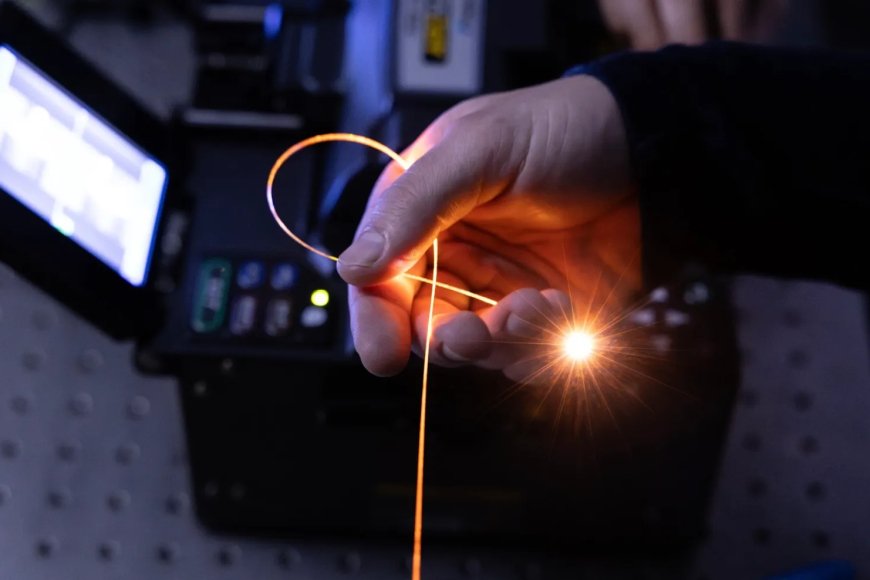
Relativity Networks’ ChronoCore technology differs from conventional fibre by guiding light primarily through an air-filled core instead of solid glass. The company says this allows light to travel roughly 47% faster than through conventional solid-core fibre, reducing the propagation delay created as data moves between locations.
That difference becomes more important as AI infrastructure spreads beyond individual racks and buildings. Large computing deployments can span multiple data centre facilities, particularly when operators need to place infrastructure near available electrical power while keeping the systems closely connected.
Relativity Networks CEO Jason Eichenholz said that a signal travelling one kilometre through conventional fibre takes roughly five microseconds, compared with about 3.5 microseconds using hollow-core fibre. Lower transmission latency could allow operators to place connected computing infrastructure farther apart while remaining within the same latency requirements.
The company is also working with fibre manufacturer Prysmian on production. Relativity Networks said the companies recently produced a 10-millimetre cable containing 24 hollow-core fibres, the company’s highest-density cable to date. Testing with Dura-Line showed the cable could be installed in standard microducts.
Relativity Networks sees multi-campus AI deployments as a key use case. As operators distribute GPUs across separate facilities to reach available power capacity, networking between those locations must remain fast enough for the infrastructure to function as a coordinated computing system.
Eichenholz described that geographic challenge as the next stage of AI infrastructure development, following earlier emphasis on adding computing hardware and improving networking within individual data centres. Hollow-core fibre is intended to reduce one of the physical constraints that arise when those systems are deployed over longer distances.