Anthro Energy has broken ground on a battery materials factory in Louisville, Kentucky, that is designed to produce 25 gigawatt-hours of electrolytes annually, enough material to support batteries for more than 300,000 electric vehicles.
The startup expects production to begin in 2028. Beyond its planned capacity, the facility is intended to provide U.S. battery manufacturers with a domestic source of electrolytes that is not tied to entities classified as foreign entities of concern.
Anthro Energy targets the U.S. battery supply chain
CEO and co-founder David Mackanic said the factory will serve domestic customers seeking high-specification battery materials and alternatives to China-linked supply. Louisville also puts Anthro near much of thecountry’ss existing battery manufacturing base, with Mackanic saying about 70% of current U.S. battery production facilities are within a 12-hour drive.
Government support is helping finance the expansion. Anthro received a $24.9 million Department of Energy award under the Bipartisan Infrastructure Law and $18.4 million in investment tax credits under the Inflation Reduction Act. Kentucky provided another $2.3 million in tax incentives tied to the creation of 110 permanent jobs.
The factory could support solid-state battery development.
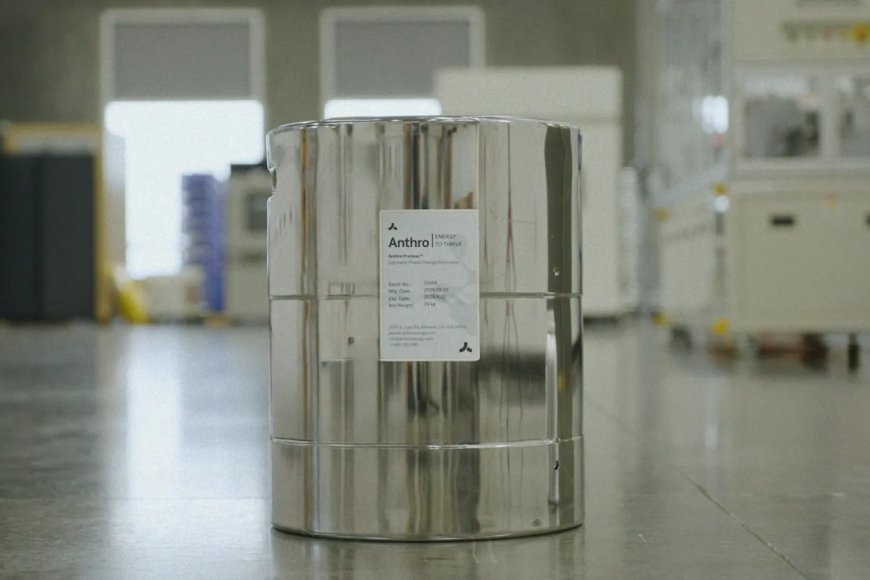
The Louisville plant will be capable of producing multiple electrolyte formulations. Anthro plans to initially manufacture materials using customer formulations while working toward greater production of Proteus, its own polymer electrolyte.
Proteus is designed to integrate into existing battery production lines with limited changes. Anthro says its manufacturing process allows the electrolyte to enter a battery cell as a liquid, penetrating the anode and cathode like conventional liquid electrolytes, before firming inside the cell.
That approach is intended to support solid- and semi-solid-state batteries while avoiding some of the manufacturing challenges associated with introducing an entirely new production process.
Solid-state batteries remain difficult to manufacture at scale
Solid-state batteries have attracted interest for their potential to increase energy density and reduce the fire risks associated with flammable liquid electrolytes. Their solid structure can also help prevent dendrites, spiky growths that can bridge electrodes and cause short circuits.
However, manufacturers have struggled to produce durable solid-state cells cost-effectively at large scale. Anthro’s polymer approach is designed to address part of that challenge while maintaining compatibility with established manufacturing methods.
Mackanic said cells using the company’s technology can be 10 to 15 times stronger than cells using liquid electrolytes, depending on the formulation, while potentially retaining flexibility. Anthro sees possible applications beyond electric vehicles, including drones and robots.
The Louisville facility will test whether Anthro can move successfully from smaller-scale materials development to commercial production, a transition that has proved difficult for other battery materials startups.