Nintendo is preparing to launch its ambitious remake of The Legend of Zelda: Ocarina of Time on November 5, 2026, just two weeks before Rockstar Games releases Grand Theft Auto VI on November 19. While much of the gaming industry is watching GTA 6’s upcoming debut, Nintendo is keeping one of its most important releases in the same month.
Nintendo is developing the Ocarina of Time remake exclusively for Nintendo Switch 2 as part of The Legend of Zelda’s 40th anniversary celebration. It features rebuilt graphics, fully voiced cutscenes, expanded dialogue, orchestral music, and modernised controls. The release sets up an unusual November, with two landmark gaming franchises competing for attention despite appealing to substantially different audiences.
Nintendo Schedules Ocarina of Time Just Ahead of GTA 6
Nintendo confirmed the November 5 release during its September 2026 Zelda anniversary presentation. The announcement came as publishers continued preparing for Grand Theft Auto VI, one of the most anticipated games in recent years.
Rockstar has scheduled GTA 6 for November 19 on PlayStation 5 and Xbox Series X|S. The two-week gap puts Nintendo’s remake directly ahead of a release expected to draw significant consumer attention and media coverage.
However, Nintendo has not publicly described its decision as a deliberate challenge to Rockstar. The close release dates matter commercially, but they don’t establish a competitive strategy or suggest Nintendo expects Zelda to outperform GTA 6.
The games also serve different platforms. Ocarina of Time is exclusive to Nintendo Switch 2, while Grand Theft Auto VI is scheduled for Sony and Microsoft’s current-generation consoles. That distinction could limit direct competition between the two releases.
Ocarina of Time Gets a Complete Visual and Gameplay Overhaul
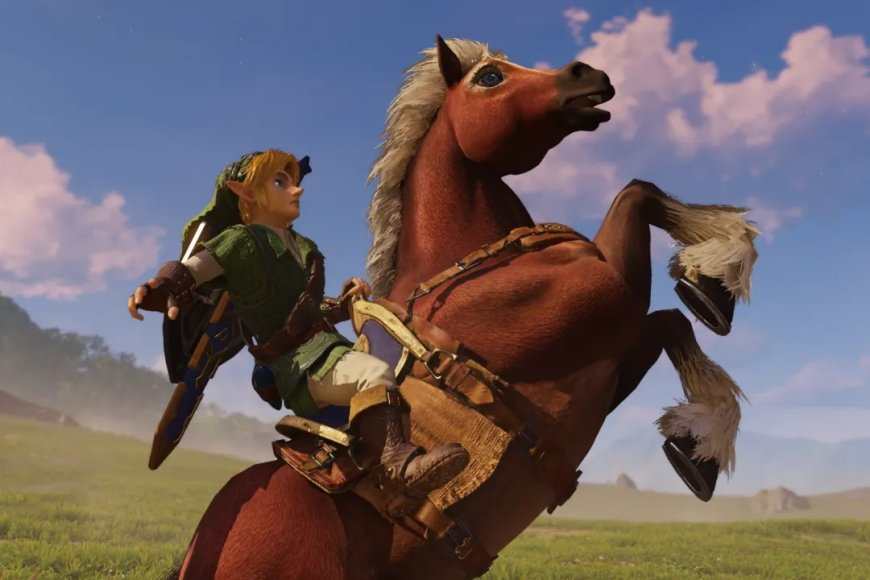
Rather than offering a straightforward remaster, Nintendo is rebuilding the 1998 Nintendo 64 classic for Switch 2. The remake retains the original adventure’s central story, following Link as he attempts to stop Ganondorf from obtaining the Triforce and taking control of Hyrule.
The improvements go considerably beyond sharper textures and a higher resolution. Nintendo has redesigned environments, refreshed character models, expanded conversations and added voice performances to cinematic sequences.
According to the company’s official anniversary announcement, the remake also includes symphonic orchestral music, faster loading and smoother performance.
These changes matter because the original Ocarina of Time helped establish many conventions of modern 3D action-adventure games. Its targeting system, dungeon design and approach to navigating three-dimensional environments influenced numerous subsequent releases.
The remake gives Nintendo a chance to introduce that design to younger players while making the original experience more approachable with modern controls and presentation.
Modern Controls Change How Link Explores Hyrule
Movement is one of the remake’s most substantial changes. Players can jump and dash with dedicated controls, giving Link more freedom than in the original Nintendo 64 release.
Nintendo also added modern camera movement via the right analogue stick. The original game relied on a more restrictive camera system shaped by the Nintendo 64 controller and its single analogue stick.
Moving the camera independently should make exploration feel more natural for players used to modern adventure games. Nintendo has also redesigned locations to accommodate the updated presentation and camera system.
A new feature called Threads of Time helps players follow their progress through the story. It displays completed objectives and upcoming goals, while a tapestry gradually develops as the adventure continues.
These additions address usability limitations that can make older games difficult for new audiences. However, Nintendo has not yet shown every dungeon or explained whether the remake changes puzzle design and combat encounters.
Voice Acting and Expanded Dialogue Give Hyrule a New Presentation
The remake adds fully voiced cinematic scenes and expanded dialogue for characters you meet throughout the adventure. This marks a substantial presentation change for a game originally built around text-based conversations.
Nintendo is also making environmental changes intended to create a more continuous world. The day-and-night cycle will continue operating in locations such as towns, rather than stopping under certain conditions as it did in the original game.
These improvements could make Hyrule feel more cohesive while preserving the broad structure of Link’s journey. The familiar progression from childhood to adulthood, major dungeons, and musical abilities remains central to the adventure.
At the same time, the expanded presentation raises questions about how closely the remake will follow the original’s pacing and atmosphere. Nintendo has shown the direction of the changes, but no one has independently reviewed the full experience yet.
Nintendo Adds Ocarina Music Features and Zelda Notes Support
Nintendo is introducing additional ways to interact with the game’s musical systems. Players can hum recognised ocarina melodies near the Switch 2’s built-in microphone to let Link play the corresponding song.
The company is also introducing compatible physical ocarina accessories, including an electronic version that can play individual notes and programmed melodies.
Zelda Notes support, available through the Nintendo Switch smartphone app, expands the experience beyond the console. Players can review their progress, take part in location-finding challenges, and use a virtual ocarina on a compatible mobile device.
The app will also include an Ocarina of Time quiz containing more than 2,000 questions. Nintendo has positioned these features as optional additions rather than requirements for completing the main adventure.
The official game listing also confirms amiibo compatibility, HDR output on supported televisions, and multiple play modes, including handheld, tabletop, and TVTV. Zelda’s0th Anniversary Gives the Remake a Larger Role.
Ocarina of Time is part of Nintendo’s broader celebration of The Legend of Zelda’s 40th anniversary. The company is releasing a themed Nintendo Switch 2 console on October 29, when the remake arrives.
The anniversary hardware features Triforce-inspired styling, with matching accessories including an Anniversaryller and carrying case. Nintendo is also planning music concerts, collectables, and other franchise-related releases extending into 2027.
The remake’s physical edition will receive special packaging for its initial production run. Nintendo also confirmed new Young Link and Young Zelda amiibo figures for 2027 that will unlock optional retro-inspired cosmetic items.
The anniversary provides a clear context for the release schedule. Nintendo is using one of its most influential games to anchor a larger celebration rather than relying entirely on the industry’s broader holiday release calAnniversaryZelda and GTA 6 Both Succeed in November?
The two games approach the market with different commercial strengths. Grand Theft Auto VI is a new instalment in a blockbuster open-world franchise, while Ocarina of Time is a modern remake of an established Nintendo classic.
Rockstar’s game targets PlayStation and Xbox owners, while Zelda is limited to Switch 2. Although some players own multiple consoles and may choose between the two, the releases don’t compete within the same hardware ecosystem.
Nintendo also benefits from Ocarina of Time’s recognisable appeal. The original game is widely regarded as one of the most influential titles in gaming history, giving the remake an established identity among longtime fans.
Still, GTA 6’s proximity creates a crowded media environment. Nintendo will need to communicate why its remake offers a worthwhile experience for returning players, particularly those who have already completed the original or its previous re-releases.
The November schedule illustrates how companies with distinctive franchises can approach major release windows differently. Nintendo’s decision to keep the date suggests confidence in Zelda’s audience, but sales and reception will determine how the strategy performs.
What to Expect From Ocarina of Time on November 5
The Legend of Zelda: Ocarina of Time remake is scheduled to launch exclusively for Nintendo Switch 2 on November 5, 2026, with a listed U.S. price of $59.99. Nintendo has confirmed physical and digital editions, modernised gameplay systems and extensive audiovisual changes.
The remake’s most compelling promise is accessibility. Revised movement, better camera controls, and clearer progression systems could let a new generation experience a landmark adventure without struggling with some of its original technical limitations.
Whether those changes preserve what made Ocarina of Time memorable remains an important question. Its historical reputation is well established, but the new version still needs to succeed as a modern release.
With GTA 6 arriving two weeks later, November is shaping up to be an unusually important month for gaming. Nintendo isn’t trying to replicate Rockstar’s sprawling crime simulation. Instead, it is relying on the enduring appeal of Link’s journey through Hyrule, supported by a major remake and a celebration of one of gaming’s longest-running franchises.