Sony has corrected reports that disc production at its Austrian manufacturing facility would fall by 90% in 2028. The company now says its Thalgau plant expects a much smaller 10% decline in overall production volume, suggesting that physical PlayStation games will remain available longer than some earlier reports indicated.
The clarification does not reverse Sony’s decision to stop manufacturing physical discs for newly released PlayStation games beginning in January 2028. Instead, it draws an important distinction: new releases will move away from discs, but games already available in physical formats can continue to receive manufacturing orders.
For PlayStation owners, the correction clarifies the future of physical games. It also raises questions about how long existing titles will remain available, whether independent manufacturers could eventually produce PlayStation discs and what a digital-focused strategy means for game ownership.
Sony Corrects the 90% Disc Production Report
The confusion began with comments from Sony DADC executive Dietmar Tannen in July about the future of the company’s disc manufacturing facility in Thalgau, Austria. Earlier interpretations suggested that production would fall to just 10% of its previous volume during 2028.
That would have represented a dramatic 90% reduction, suggesting a rapid decline in Sony’s physical media business. However, Sony DADC later clarified that the original statement referred to a 10% reduction in total output, not a reduction to one-tenth of existing production.
Sony corrected journalist Brian Crecente directly and published the correction on September 4 in his Game industry newsletter. Sony’sstatement makes clear that the plant is not facing the near-total production collapse described in some reports.
The revised forecast concerns overall production volume during 2028. Sony has not provided equivalent projections for subsequent years, so the longer-term manufacturing outlook remains uncertain.
PlayStation Will Still Stop Producing Discs for New Games in 2028
Although the manufacturing forecast has changed, Sony’s broader distribution strategy remains intact. In a July 1 announcement, Sony Interactive Entertainment confirmed that physical disc production for newly released PlayStation games will end beginning in January 2028.
The company explained in its official PlayStation announcement that the transition would not affect games already released on disc or titles scheduled for physical release before the January 2028 cutoff.
That distinction means the end of new physical releasesdoesn’tt automatically mean existing PlayStation discs will disappear from retailers. Publishers can keep placing manufacturing orders for eligible older titles, allowing physical copies to remain available as long as demand continues.
Sony DADC confirmed that reorders would still enter the market after January 2028. However, the company has not set a timeline for how long individual games will remain in print or whether publishers will maintain consistent retail availability.
Why Sony’s Austrian Disc Factory Matters
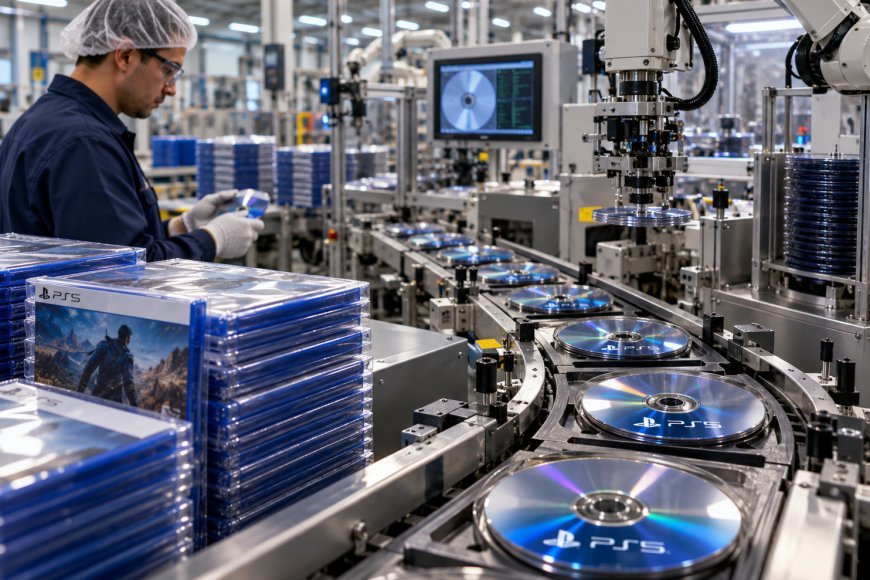
The Thalgau facility plays an important role in Sony’s physical media operations. It is part of Sony DADC, the company’s disc manufacturing and distribution business, which produces optical media for PlayStation and other entertainment formats.
According to reporting on the facility’s operations, PlayStation discs account for approximately half of its production volume. New PlayStation orders account for only a portion of that activity, which helps explain why the end of new releases would not necessarily cause an immediate collapse in total factory output.
The facility can continue manufacturing eligible older PlayStation titles alongside other disc products. Its overall production outlook therefore cannot be measured solely by Sony’s decision to stop producing discs for newly released games.
Earlier Austrian reporting also raised questions about changes to the factory’s workforce and a possible shift toward other manufacturing activities, including microlens production. Sony’s updated volume forecastdoesn’tt indicate whether those restructuring plans have changed, and their status remains unconfirmed.
What Happens to Existing PS5 Physical Games?
For consumers who prefer boxed games, Sony’s clarification is significant. Titles released in physical form before January 2028 can continue receiving disc reorders, which may help maintain availability through retailers and specialist game stores.
However, continued manufacturing eligibility should not be confused with a guarantee of permanent availability. Publishers decide whether additional copies are commercially worthwhile, and individual releases can become difficult to find if demanddoesn’tt justify another production run.
The same distinction applies to collectors. Existing physical games may remain available for some time, but Sony has not announced a permanent manufacturing commitment covering every title in its catalogue.
New PlayStation games released after the cutoff will face a different situation because Sony’s policy ends new physical disc production. That change could make digital distribution the standard way to buy future releases on PlayStation consoles.
Could Third-Party Manufacturers Keep PlayStation Discs Alive?
One possible solution is to allow outside manufacturers to produce licensed PlayStation discs. However, Sony currently controls the proprietary manufacturing process through Sony DADC, creating an important distinction between PlayStation and Xbox physical media operations.
Microsoft already permits certified external manufacturers to replicate Xbox discs under its authorised production arrangements. Publishers can work with approved suppliers rather than depending exclusively on a single company-owned disc manufacturing operation.
Sony has not announced a comparable licensing program for PlayStation. Without such an arrangement, independent physical media publishers would have limited options for producing new PlayStation disc editions after the company’s cutoff.
Former PlayStation executive Shawn Layden discussed this challenge in Crecente’s reporting, suggesting that external manufacturing could offer a potential route for preserving physical editions. However, that remains an industry proposal, not an announced Sony initiative.
Smaller publishers specialising in collector’s editions could benefit from such a system, but Sony has not confirmed it intends to license its disc-manufacturing technology to third parties.
Why Physical Game Ownership Still Matters
The gradual transition toward digital distribution affects more than manufacturing. Physical games offer options that digital storefront purchases often cannot match, including resale, lending, and buying used copies.
Digital games offer important conveniences, such as immediate downloads, automatic updates and access without changing discs. However, they also depend on account access, licensing conditions and the continued availability of necessary software downloads or online services.
Physical copies are not completely independent of those limitations. Some modern games require downloads, patches, or online authentication to function as intended. Nevertheless, discs offer a transferable product and an alternative to buying directly from a platform-controlled digital store.
These differences matter to collectors, budget-conscious players and people concerned about long-term game preservation. Physical copies also create competition between retailers, letting consumers compare prices outside a console manufacturer’s digital marketplace.
What Sony’s Correction Means for PlayStation’s Future
Sony’s clarification changes the immediate outlook for physical PlayStation disc production, but not the company’s overall direction. A projected 10% decline in the Austrian facility’s 2028 output is substantially less severe than the previously reported 90% reduction.
At the same time, the January 2028 cutoff for newly released physical games remains the more consequential decision for consumers. Sony can keep manufacturing existing discs, but future PlayStation releases will increasingly rely on digital distribution.
The remaining questions concern how long older titles will stay in production, whether Sony might consider outside manufacturing partnerships and what alternatives publishers can offer players who prefer physical ownership.
For now, PlayStation discs are not disappearing from manufacturing as quickly as initially suggested. Sony has corrected the production forecast, and existing titles remain eligible for reorders. But the long-term transition away from new physical PlayStation releases is still moving forward, making the future of game ownership and preservation an increasingly important issue for the industry.